
Why Your Check Engine Light Comes On (And What You Should Do Next)

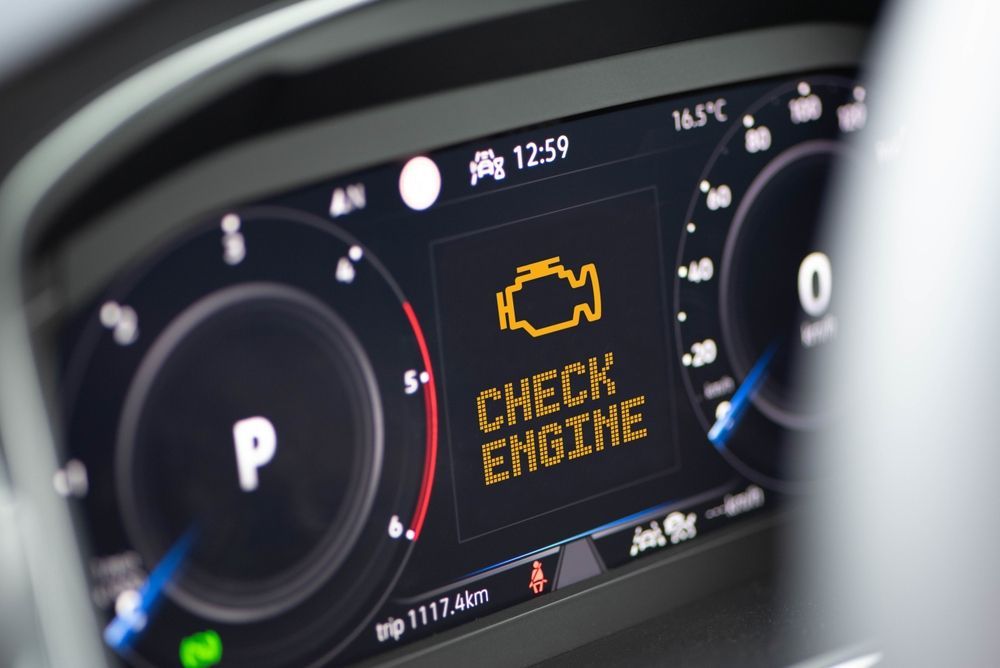
If you are driving around Cincinnati and that little orange check engine light suddenly pops on, it is hard not to feel your stomach drop a bit. Even if the car seems to be driving fine, your brain immediately goes to worst case scenario.
Is it safe to drive?
Is my engine about to fail?
Am I looking at a huge repair bill?
The good news is this. The check engine light does not automatically mean your car is falling apart. In fact, it often comes on for things that are relatively minor. But it does always mean something needs attention. Think of it as your vehicle raising its hand and saying, “Hey, something is not working the way it should.”
In this blog, I will break down what your check engine light is actually telling you, the most common reasons it comes on, what you should do right away, and when you need to schedule service. If you are looking for check engine light diagnostics in Cincinnati, this guide will also help you understand what to expect when you bring your car in.
What the check engine light really means
Your car has a computer system called the ECU or PCM. It monitors sensors throughout the engine and emissions system. When it detects something outside of the normal range, it stores a trouble code and turns the check engine light on.
That code does not always tell you the exact part that is bad. It tells you what system is seeing an issue.
That is why auto repair shops do not just “clear the light.” The proper process is to scan the vehicle, interpret the code, and then diagnose the root cause.
Solid check engine light vs flashing check engine light
This is a big deal, so let’s make it clear.
If your check engine light is solid, it usually means the car can still be driven short term, but it needs to be checked as soon as possible.
If your check engine light is flashing, stop driving if you can. A flashing check engine light often means an active misfire, which can damage the catalytic converter quickly. That can turn a manageable repair into a very expensive one.
If you are in the Cincinnati area and your check engine light is flashing, call for assistance or get the vehicle towed to a shop. That one decision could save you a lot of money.
Common reasons the check engine light comes on
There are dozens of reasons a check engine light might appear, but some are far more common than others. Here are the issues we see most often when drivers come in for engine diagnostics in Cincinnati.
Loose or faulty gas cap
This one surprises people, but it is very real. A loose gas cap can trigger an evaporative emissions leak code. Your vehicle’s fuel system is designed to be sealed. When it is not sealed properly, the system detects a leak and turns the check engine light on.
If your light comes on soon after filling up, check the gas cap first. Tighten it until it clicks. Then drive for a day or two. Sometimes the light will reset itself after enough drive cycles. If it does not, you still may need a scan to confirm what is happening.
Faulty oxygen sensor
Oxygen sensors measure how much oxygen is in the exhaust and help the engine adjust fuel mixture. When an oxygen sensor is failing, your car may run richer than normal, fuel economy drops, and emissions increase.
In Cincinnati, we see oxygen sensor issues often due to age, mileage, and wear. It is not usually an emergency, but it should be addressed because it impacts engine performance and can cause damage over time.
Misfire issues (spark plugs or ignition coils)
Misfires are one of the most common and most important issues tied to the check engine light.
A misfire means one or more cylinders are not firing properly. This can be caused by worn spark plugs, failing ignition coils, fuel injector problems, or vacuum leaks.
Symptoms might include shaking at idle, hesitation when accelerating, reduced power, or a noticeable rough feeling while driving.
Misfires should never be ignored in Cincinnati traffic where you need reliable acceleration and safe merging on highways like I-71 or I-75.
Mass airflow sensor issues
Your mass airflow sensor helps your engine determine how much air is entering. This affects fuel delivery. When it fails, your vehicle can run poorly and fuel economy often drops.
Drivers may notice hesitation, hard starting, or strange shifting behavior depending on the vehicle.
Catalytic converter efficiency problems
The catalytic converter is part of the emissions system, and it is expensive. When the check engine light is on for too long due to a misfire or fuel mixture issue, it can damage the catalytic converter.
Sometimes the converter itself is failing. Other times it is “reporting” a problem that is actually coming from somewhere else, like repeated misfires.
This is where diagnosis matters most. You do not want to replace a catalytic converter if the real issue is upstream.
EVAP system leaks
EVAP codes are extremely common. They relate to the evaporative emissions system, which captures fuel vapors and keeps them from venting into the atmosphere.
Common EVAP issues include cracked hoses, purge valves, vent valves, or loose connections.
EVAP problems usually will not cause your car to break down immediately, but they can cause the vehicle to fail emissions testing, and they often lead to recurring check engine lights that do not go away without repair.
What you should do the moment the check engine light comes on
Here is a simple plan you can follow without panicking.
First, notice whether it is solid or flashing.
If it is flashing, reduce speed and pull over when safe. Turn the car off and call for help. Do not keep driving.
If it is solid, you can usually continue driving, but avoid aggressive acceleration, long highway trips, or heavy towing until it is checked.
Second, pay attention to how the car is behaving.
Ask yourself:
Is it shaking?
Is it down on power?
Does it smell like fuel?
Is it running hot?
Is it making new noises?
If it feels unsafe or noticeably different, do not push it.
Third, check the gas cap.
It takes five seconds and it is one of the most common causes.
Finally, schedule diagnostics.
A scan tells us what the vehicle is reporting, but diagnostics tells us why.
Can you just drive with the check engine light on?
This is one of the most common questions we hear from Cincinnati drivers.
The honest answer is, sometimes yes, but not for long, and not blindly.
A solid check engine light might be something minor like a gas cap or sensor. But it could also be a misfire, fuel mixture problem, or transmission related issue that is building into something bigger.
The risk is not just that it breaks down. The risk is that you cause damage by continuing to drive without knowing what is wrong.
That is why we recommend scheduling check engine light diagnostics quickly. The sooner you diagnose it, the less likely it turns into a major repair.
Why “free code scans” are not always enough
You have probably seen auto parts stores offer free code scans. That is fine for getting a general direction, but it is not a real diagnostic process.
Here is why.
A code scan gives you the trouble code. It does not test the system. It does not verify the root cause. It does not confirm whether the problem is current or intermittent.
For example, you might get a code that points to an oxygen sensor. But the oxygen sensor might be reading incorrectly because the engine is running rich due to a completely different issue.
Real diagnostics involves confirming what is actually failing and why, so you repair the correct thing the first time.
What happens during a check engine light diagnostic appointment?
When you schedule a check engine light diagnostic in Cincinnati, the goal is clarity.
A typical process includes:
Scanning the trouble codes and reviewing freeze frame data
Inspecting engine bay components related to the code
Testing sensors or circuits if needed
Checking for vacuum leaks
Verifying fuel trims and misfire counters
Performing a test drive when appropriate
The end result is not just “here is the code.” It is “here is the cause, and here is what it will take to fix it.”
Why Cincinnati drivers should not delay engine diagnostics
Cincinnati weather and driving conditions make small issues worse faster than people expect.
Short trips, winter cold starts, road salt exposure, and stop and go commutes can create a perfect storm for sensor issues, ignition wear, and emissions system problems.
Plus, the longer you drive with a problem, the more likely it causes secondary damage.
For example:
A misfire can damage the catalytic converter
Running rich can foul spark plugs and oxygen sensors
Vacuum leaks can cause lean conditions and overheating
Fuel system problems can reduce power and reliability
So even if it “seems fine,” it is worth having it checked.
Schedule check engine light diagnostics in Cincinnati
If your check engine light is on, you do not need to panic, but you do need answers.
At Avid Auto Care, we help Cincinnati drivers diagnose engine issues quickly and accurately, so you are not guessing, replacing the wrong parts, or putting off repairs that could get worse.
If you are searching for check engine light service in Cincinnati, reach out today and schedule your diagnostic appointment. We will help you figure out what is going on and get you back on the road with confidence.